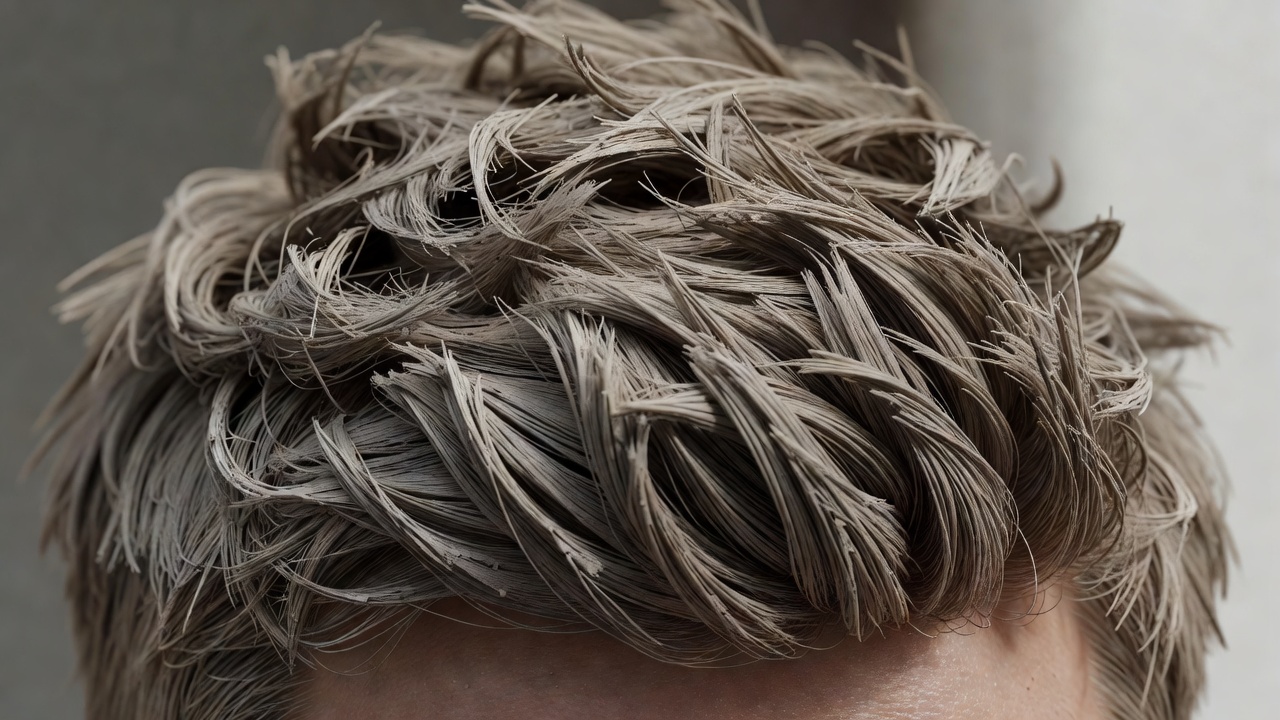
The vast array of men's hair styling products often leads to confusion and poor aesthetic outcomes. Applying a heavy, oil-based pomade to fine, thinning hair results in a flattened, greasy appearance, while applying a light cream to thick, coarse hair yields no structural hold whatsoever. Achieving the desired look requires matching the physical properties of the styling compound to the structural reality of the hair follicle.
Styling compounds are generally categorized by two metrics: Hold (the structural rigidity it provides) and Shine (the light-reflecting properties of the finish). Understanding the primary formulations allows for precise, predictable styling.
Pomades: The Classic Standard
Pomades are designed for slick, tightly combed styles such as side parts, slick-backs, and pompadours. They offer high shine and do not dry hard, allowing the hair to be restyled throughout the day.
- Oil-Based Pomades: The traditional formulas used since the 1920s, consisting primarily of petroleum jelly, beeswax, and mineral oils. They provide unparalleled slickness and hold that withstands rain and sweat. However, they are exceptionally difficult to wash out, often requiring specialized degreasing shampoos.
- Water-Based Pomades: Modern chemistry's answer to the oil-based dilemma. Formulated with water-soluble polymers, they offer similar shine and hold but rinse out instantly under the shower. Their drawback is that they tend to dry slightly stiffer than their oil-based counterparts, though not as rigid as a gel.
Clays and Pastes: Texture and Volume
For modern, textured, "messy" styles, clays and pastes are the instruments of choice. They are characterized by a matte (no-shine) finish, which makes the hair look naturally thick and unstyled.
True styling clays include mineral powders—most commonly Bentonite or Kaolin. These minerals swell upon contact with moisture, absorbing natural oils from the hair and physically expanding the hair shaft. This makes clay an exceptional choice for men with fine hair, as it creates the illusion of volume and density while providing a medium-to-firm, pliable hold.
"A common error when using clays is applying them to wet hair. The minerals will bind to the water rather than the hair shaft, resulting in a heavy, clumpy application. Clays perform optimally when applied to completely dry, blow-dried hair."
Creams: The Natural Polish
Styling creams offer the lowest hold and a low-to-medium shine. They are lotion-like in consistency and are primarily conditioning agents. Creams are ideal for men with longer styles or thick, curly hair that requires taming and frizz control rather than structural elevation. They provide a polished, relaxed look that moves naturally with the head.
Pre-Stylers: The Architectural Support
Professional styling often relies on a two-step process, utilizing a pre-styler applied to damp hair before blow-drying.
Sea Salt Sprays: One of the most effective pre-stylers. The salt crystals bind to the hair cuticles, providing grit, friction, and significant volume when activated by the heat of a blow dryer. Once dried into this foundation, a much smaller amount of the finishing product (like a clay or paste) is required, preventing the hair from being weighed down by heavy waxes.
Application Technique
Regardless of the compound chosen, the method of application dictates success. A dime-sized amount must be thoroughly emulsified—rubbed vigorously between the palms until the product is entirely clear and warmed through friction. It should be applied evenly from the roots to the tips, ensuring the structural support starts at the base of the follicle rather than sitting heavily on the canopy of the hair.