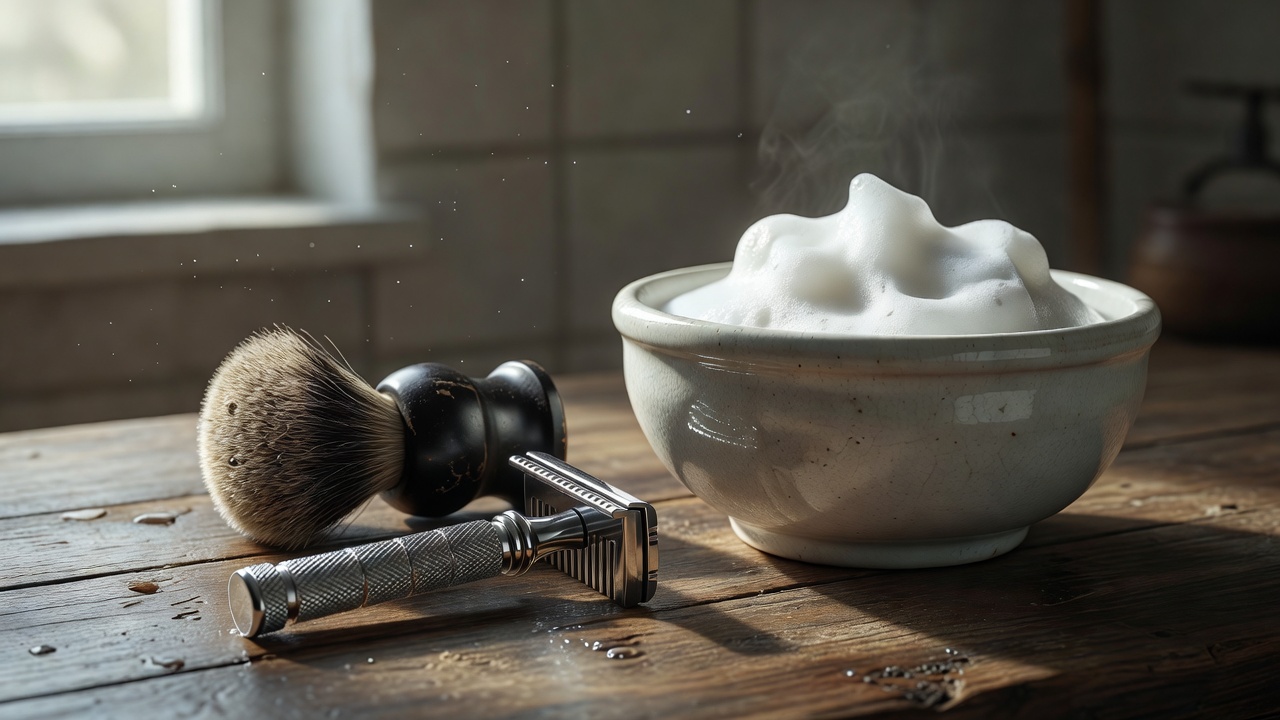
The modern consumer shaving market has spent decades engaged in an arms race of blade quantity, marketing five-, six-, and even seven-blade cartridge systems as the pinnacle of grooming technology. Yet, dermatological evidence and the enduring traditions of master barbers suggest that this escalation is not only unnecessary but actively detrimental to skin health. The return to the traditional wet shave—utilizing a single-blade safety razor and brush-whipped lather—represents a triumph of efficacy over excess.
The Mechanics of Hysteresis
The fundamental flaw of the multi-blade cartridge lies in a mechanism called hysteresis. The first blade in a cartridge is designed to pull the hair slightly out of the follicle. The subsequent blades cut the hair before it retracts. While this results in a very close shave, the hair frequently retracts beneath the surface of the skin. As it attempts to grow back, it can easily pierce the sidewall of the follicle, resulting in pseudofolliculitis barbae—commonly known as razor bumps or ingrown hairs.
A double-edge (DE) safety razor employs a single, exceptionally sharp blade that shears the hair cleanly at the surface of the skin. It requires the operator to control the angle (typically around 30 degrees) and pressure. By cutting at the surface line rather than beneath it, the risk of ingrown hairs is drastically mitigated.
The Role of the Brush and Lather
Pressurized aerosol shaving foams consist largely of propellants (like isobutane) and air, offering inferior lubrication and drying out the skin. True wet shaving relies on the generation of lather from a hard soap or rich cream using a dedicated shaving brush.
- Badger Hair Brushes: Historically the gold standard, badger hair retains a massive amount of water, which is crucial for building a dense, hydrated lather. However, ethical concerns have driven innovation elsewhere.
- Synthetic Brushes: Modern synthetics (often utilizing materials like Taklon) have surpassed lower-grade badger brushes. They are cruelty-free, dry rapidly (preventing mildew), and whip up lather with remarkable efficiency.
"The mechanical action of the brush against the face is twofold: it physically exfoliates dead skin cells that would otherwise clog the razor, and it lifts the whiskers away from the skin, suspending them in a highly alkaline matrix that softens the keratin structure."
Execution: The Passes
Proper technique dictates shaving in passes, respecting the natural grain (the direction of growth) of the facial hair. Attempting to shear away all hair in a single, aggressive stroke against the grain is a recipe for severe irritation and micro-lacerations.
The standard protocol involves a first pass with the grain to remove the bulk of the hair. If a closer result is desired, the face is re-lathered for a second pass across the grain. Only those with robust skin should attempt a final pass against the grain. Let the weight of the solid metal razor do the work; applying manual pressure, a habit learned from light plastic cartridges, will result in cuts.
Post-Shave Remediation
Shaving is an inherently traumatic event for the epidermis, stripping away the upper cellular layer along with the hair. Immediate post-shave care is required to restore the acid mantle and soothe inflammation.
Traditional alcohol-based aftershave splashes act as powerful astringents and antiseptics, but they severely dehydrate the skin. The modern standard calls for an alcohol-free post-shave balm. Formulations utilizing witch hazel for mild astringency, combined with aloe vera and allantoin to calm erythema (redness), provide the ideal conclusion to the wet shave ritual, leaving the skin protected and resilient.